'Instead of Weeds of Worry, Let's Plant Moments Like Flowers'
Introduction
At the end of a busy day, I lean back on the sofa, close my eyes for a moment. My mind is filled with all sorts of worries, anxieties, and a never-ending to-do list. In fact, it feels as if the ceaseless stream of distracting thoughts is growing relentlessly, like weeds in a garden.
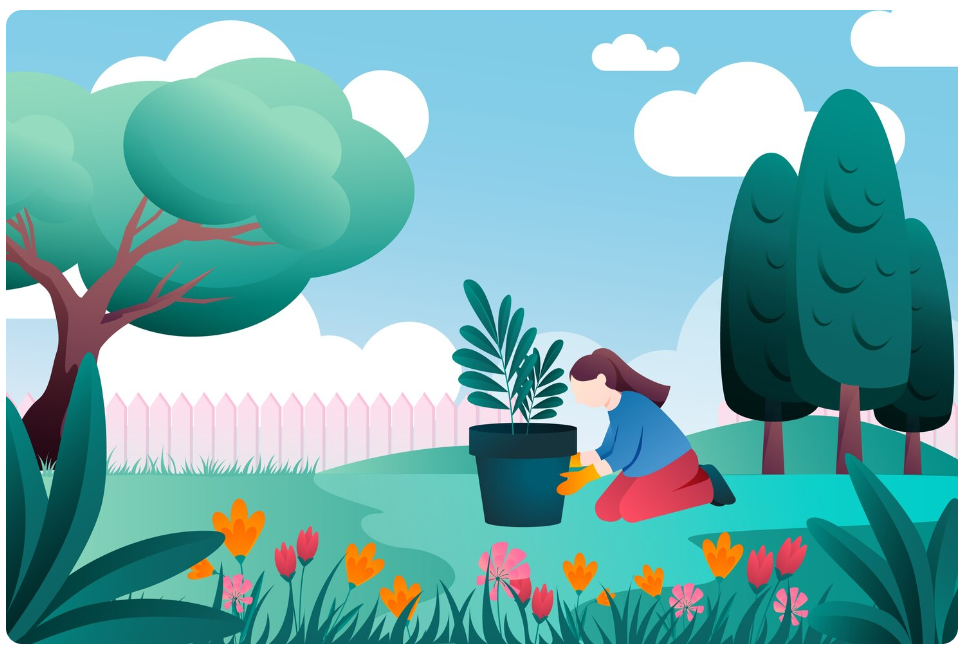
But then, a fleeting image came to mind: the flowers I saw earlier while passing by a flower shop. From nameless blossoms to roses, freesias, and tiny daisies, seeing those flowers arranged in the shop, a thought suddenly bloomed: "What if I could cultivate my mind like a garden?" I decided to plant "my own peaceful garden."
Pulling out worries like weeds and planting moments like flowers – that might just be the greatest gift we can give ourselves.
Imagining a beautiful blossom unfolding in a field bathed in warm sunshine, a sense of peace emerging in my mind, I took a deep breath. That small act of imagination softened my heart considerably and allowed me to temporarily set aside the weed-like worries. This is how 'Cultivating the Garden of Your Mind' demonstrates the power of imagery training to make our internal mental space beautiful and peaceful.
Psychological & Neuroscientific Background
'Imagery Training' (Visualization) is a meditation technique recognized for its effectiveness in neuroscience and psychology. Imagery training is a method of vividly envisioning specific scenes, spaces, or feelings in your mind to enhance mental stability and concentration.
Brain imaging studies show that the brain has a unique characteristic of barely distinguishing between actual experience and imagination. Therefore, simply conjuring positive and peaceful scenes has been found to calm the activity of the amygdala (the region controlling anxiety), activate the prefrontal cortex, stabilize neural networks and hormone secretion, thereby alleviating stress and improving emotional regulation.
Moreover, when negative thoughts frequently arise, imagery training that fills the mind with healthy landscapes helps reduce negative brain signals and transition to positive emotions. This is a highly effective self-care method for managing everyday anxiety and stress.
In essence, imagining a mental garden is not mere 'daydreaming' but a scientifically proven psychological recovery technique.
Practical Tips: A Short Imagery Meditation Guide
- Find a comfortable posture: Close your eyes and regulate your breath. (Inhale for 5 seconds, exhale for 5 seconds.)
- Envision 'Your Own Garden' in your mind: Visualize it in detail—trees, a bench, the sky's color, warm sunlight, a gentle breeze, fresh grassy scents, and lovely flowers blooming.
- Imagine pulling out negative thoughts: Picture these negative thoughts as weeds growing in your mental garden, and gently imagine pulling them out and discarding them.
- Plant something beautiful in their place: Instead, imagine planting and nurturing bright, fragrant flowers and trees. Picture moments of gratitude, instances that brought laughter, or kind words you've heard, and plant them in your mind's garden.
- Stroll through your garden: Breathe comfortably, inhaling and exhaling, as you imagine walking in this peaceful garden. Feel your mind calm and find serenity. Whisper to yourself, "I am safe. I am okay."
- Gently open your eyes: Repeat this process for about 5-10 minutes before slowly opening your eyes.
Frequently Asked Questions (FAQ)
Q1: How is imagery training different from meditation?
A1: Imagery training is a type of meditation that focuses on stabilizing the mind by visualizing specific images. While meditation often emphasizes breathing or present-moment awareness, imagery training primarily uses the method of visualizing positive scenes.
Q2: Do I need to practice imagery training every day?
A2: Consistent practice yields greater effects, but even just 5 minutes a day, whenever you can, helps in alleviating stress and managing your mind.
Q3: What if I find it difficult to visualize?
A3: Try using real photos or videos as references, or simply focus on recalling peaceful natural landscapes. It's perfectly fine if your visualization isn't detailed at first. Even just imagining a brief scene like 'sitting under the shadow of a tree' can be effective.
Q4: Can I expect immediate effects from imagery training?
A4: Effects vary individually, but with consistent practice, you will gradually notice improvements in emotional regulation and concentration.
Q5: What should I do if negative thoughts keep coming up during imagery training?
A5: Instead of trying to suppress negative thoughts, imagine them as weeds in your mental garden and slowly visualize yourself pulling them out.
🌸 A Word of Comfort for You: "Let's Plant Flowers Where Worries Grow Like Weeds"
Our days may often be filled with worries, yet amidst them, we can still discover small blooming flowers. If we only focus on the weeds of worry, our hearts quickly become tired. But if we look at the flower-like moments quietly blooming beside them, the colors of life change. "Worries are like weeds that, upon every glance, seem to have grown again. So, pull them out little by little each day, and plant flowers in their place. The garden of your mind is always ready to bloom."
(이 글은 '마음의 숨 고르기 시리즈 6편. 마음의 정원 가꾸기'의 영어 버전 글입니다.)
원본: https://kiheo.tistory.com/134
🌼마음의 숨 고르기 시리즈 6편. 마음의 정원 가꾸기
“잡초 같은 걱정 대신 꽃 같은 순간으로” 인트로 바쁜 하루가 끝나고 집에 돌아와 잠시 소파에 기대어 눈을 감아봅니다. 머릿속은 온갖 걱정과 불안, 해야 할 일들로 가득 차 있습니다. 심지어
kiheo.tistory.com