Subtitle: Self-Determination Theory (SDT): Autonomy · Competence · Relatedness → Methods to Enhance Intrinsic Motivation
Intro: "Why Am I Doing This Work?"
As a nurse, I've spent countless sleepless nights and hectic days in the hospital. I've become accustomed to helping patients recover, delivering accurate information to their guardians, and collaborating with colleagues in hospital work. I often feel a sense of accomplishment when patients tell me, "I recovered thanks to you, Nurse!" or "You worked hard!" or when colleagues compliment me with, "Your charting is meticulously done!"
Outwardly, with a career I'm proud of and positive evaluations, I was clearly living as a 'successful nurse.' However, there were moments, lying exhausted in bed, when an inexplicable emptiness would creep in. The question, "Why am I doing this work?" would surface from deep within. The answers were always things like, 'Because it's the job I chose, so I have to do it,' 'It's a profession for a livelihood,' or 'It's a role to meet others' expectations.' Even amidst numerous external rewards and praises, I couldn't shake the feeling that something crucial was missing deep within my heart.
Yet, amidst those questions, it was when I reached out a comforting hand to an exhausted patient, and their suffering genuinely felt like my own, that I finally felt the reason why I was doing this work. I realized that the true power that moved me was not external praise or rewards, but 'intrinsic motivation' stemming from deep within. Today, we will discuss the power of this 'intrinsic motivation' that continuously fosters our growth and happiness, and concrete ways to cultivate it. We hope that by exploring how powerful 'the joy of doing what I love' is, and how we can discover and utilize this power, you will gain the small courage for tomorrow's change.
🧭 Psychological & Neuroscientific Background: Self-Determination Theory, The Science of 'The Power of Doing What I Love' - Three Psychological Needs for Intrinsic Motivation
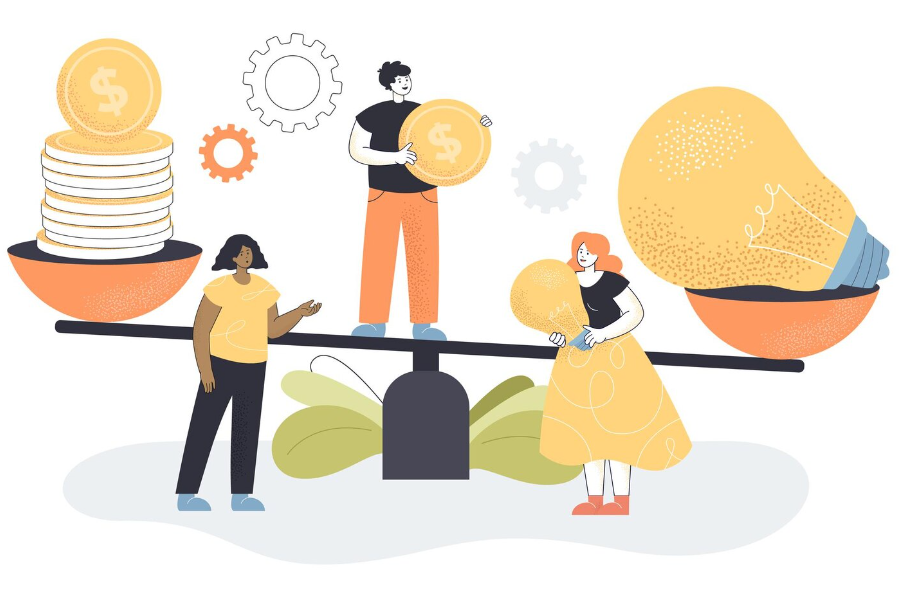
We exert the most powerful force when we feel like 'we want to do' something. When moved by external rewards or punishments (extrinsic motivation), the behavior tends to be temporary and lack sustainability. In contrast, when we choose and act out of genuine enjoyment (intrinsic motivation), we engage more deeply, create more innovative results, and experience greater happiness for much longer periods. The psychological theory that explores these fundamental motivations for human behavior is the 'Self-Determination Theory (SDT).'
Proposed by Edward Deci and Richard Ryan, Self-Determination Theory states that "people are inherently wired to grow, and they experience the highest motivation and well-being when these growth needs are met." This motivational theory explains that humans have three basic psychological needs—Autonomy, Competence, and Relatedness—and that intrinsic motivation is enhanced when these needs are satisfied.
1. Autonomy: The Feeling of 'Being the Master of My Own Life' – "The Feeling of Choosing for Oneself, Not Because Someone Else Told Me To"
- Definition: The feeling of being able to choose and decide for oneself, the desire to act voluntarily without external pressure or control. For a nurse, an example of autonomy is the satisfaction derived not from performing a specific procedure 'because a superior ordered it' or 'it's regulation,' but from deciding, 'I need to do this for the patient's recovery, because I want to help the patient.'
- Neuroscientific Meaning: Autonomy is deeply connected to the activity of the brain's Prefrontal Cortex. The prefrontal cortex governs self-directed behaviors such as decision-making, planning, and goal setting. The feeling of making choices and having control activates and strengthens the functions of the prefrontal cortex. This also positively impacts the dopamine system, enhancing the expectation of achievement and reward from one's own choices.
2. Competence: The Conviction 'I Can Do It Well'
- Definition: The desire to effectively and skillfully exert one's abilities in interaction with the environment. The feeling of 'I did well!' when successfully starting an IV on the first try or quickly managing a complex patient situation comes from the fulfillment of competence. For example, during my new nurse days, when "drawing blood felt scary and my hands shook," overcoming that and hitting a patient's vein on the first try transformed that sense of accomplishment into confidence that 'I can do it again next time.' This is when competence converts into intrinsic motivation.
- Neuroscientific Meaning: When feeling competent, the brain's reward circuit activates, and dopamine is released. As small achievements are repeated, our brain is increasingly motivated to 'do better.' Specifically, feedback on 'successfully completing a challenging task' trains the brain to positively reinforce that behavior, further contributing to the formation of a growth mindset that eagerly embraces difficult challenges. The process of acquiring and developing new skills promotes the brain's Neuroplasticity.
3. Relatedness: The Feeling of 'Being Connected'
- Definition: The desire to form meaningful relationships with others, to contribute to one's community, and to feel a sense of belonging. Smooth teamwork with fellow nurses, rapport with patients, and the sense of stability and support gained through mentor-mentee relationships satisfy our need for relatedness and belonging as social beings.
- Neuroscientific Meaning: Relatedness influences the secretion of oxytocin, known as the social bonding hormone, and serotonin, crucial for mood regulation. Positive interactions with others lower stress hormone (cortisol) levels and enhance psychological stability and happiness, providing an important foundation for sustaining intrinsic motivation. A sense of belonging is also linked to the Temporal Lobe region of the brain, affecting social information processing abilities.
🔋 Extrinsic vs. Intrinsic Motivation — The Two Forces That Drive Us
Our motivation when working or studying generally falls into two categories:
| Category | Extrinsic Motivation | Intrinsic Motivation |
| Source of Motivation | External (rewards, evaluations, pressure, etc.) | Internal (interest, meaning, desire for growth, etc.) |
| Examples | Salary, supervisor's praise, performance review | Joy of learning, pleasure of self-growth |
| Duration | Temporary, easily depleted | Long-term, self-sustaining |
| Emotional Response | Stress, anxiety, fatigue | Engagement, satisfaction, vitality |

The Limits of Extrinsic Motivation and the Power of Intrinsic Motivation:
Extrinsic motivation is driven by external rewards such as money, praise, or prestige. While it can be effective for short-term behaviors, when it's not 'something I genuinely want to do,' our brains easily tire, and motivation tends to disappear once the external reward is removed.
In contrast, intrinsic motivation, "because the activity itself is meaningful and enjoyable to me," generates sustained energy, leading to deeper engagement and higher performance. Neuroscientifically, intrinsic motivation induces a more stable and continuous release of dopamine than external rewards, leading to long-term happiness and satisfaction. In other words, one gains greater drive from the 'joy of helping someone with my writing' than from simply 'operating a blog to earn money.' Ultimately, the key to sustainable growth is 'intrinsic motivation.'
In conclusion, Self-Determination Theory posits that to continuously grow and experience happiness through intrinsic motivation, we must fulfill three basic psychological needs: choosing autonomously, performing competently, and forming meaningful relationships with others. Understanding and applying these needs in life is a wise strategy for discovering 'the power of doing what I love' over external rewards and unleashing inner energy.
Neuroscientific Approach to Fostering Intrinsic Motivation
Intrinsic motivation goes beyond emotional satisfaction; it actually activates the brain's energy system.
| Brain Region/Hormone | Role | Connection to Intrinsic Motivation |
| Dopamine Pathway | Reward · Accomplishment | Activated when achieving personally meaningful goals |
| Prefrontal Cortex | Planning · Decision-making | Activated when maintaining autonomous choices and flow states |
| Serotonin | Stability · Satisfaction | Contributes to maintaining relatedness and positive emotions |
🌱 Practical Tips to Strengthen Intrinsic Motivation: Three Ways to Ignite Your Inner Flame
Now, let's explore concrete practical tips to satisfy the three core needs of Self-Determination Theory and strengthen intrinsic motivation.
1. Enhancing Autonomy: Expanding the Scope of 'My Choices'
- Practice: While you cannot decide everything, create small choices for yourself.
- "Why": Discover the meaning and purpose behind what you do. Autonomy increases when you clarify 'why you are doing this,' rather than just 'because it was instructed.'
- "How": Find your own way within your work or daily routine. (e.g., Set your own priorities within given tasks, create patient education materials in your own style).
- "What": Whenever possible, choose what to do. (e.g., Decide for yourself what self-development activities to pursue in your leisure time, choose books you want to read).
- Example (as a nurse): "In addition to my daily regular duties, for 30 minutes each day, I will research new medical knowledge that interests me (autonomous learning choice)." "Volunteer to present improvement suggestions at this week's ward meeting." "Independently design patient education methods."
- Elaboration: We truly become engaged when we feel a sense of control. Even if you cannot fully control a situation, it is important to consciously seek out and utilize small choices. This strengthens prefrontal cortex activity and gives a sense that your actions stem from your own choices, acting as a powerful fuel for igniting intrinsic motivation.
2. Fulfilling Competence: Designing Experiences of 'Small Successes'
- Practice: Consistently experience 'small successes that cannot fail' to feel that you are effectively utilizing your abilities. (This connects with the previous 'Power of Micro Habits' installment.)
- "Setting Learning Goals": Focus on the process rather than the outcome. Set goals based on 'what I will learn and grow through this process?'
- "Requesting and Utilizing Feedback": Ask for constructive feedback from those around you and use it as an opportunity for growth. This also helps in identifying your strengths.
- "Recording and Visualization": At the end of each day, record "one thing I did well today." Keep a record of your small daily achievements and visually confirm them to give your brain positive reinforcement.
- Example (as a nurse): "Successfully place an IV on the first try today," "Accurately deliver medication instructions to a patient 3 times," "Clearly hand over patient information to a new nurse." "Read the manual for a new piece of equipment for 5 minutes."
- Elaboration: Competence is strengthened through continuous learning and growth. The brain experiences reward in the process of learning and mastering new skills. As small beliefs of 'I can do it' accumulate, they become motivation to confidently take on bigger challenges. Reframing failures as 'learning opportunities' is also a crucial way to enhance competence.
3. Strengthening Relatedness: Creating 'Meaningful Connections'
- Practice: Consciously create experiences of forming meaningful relationships with others.
- "Listen with Sincerity": Take time to fully listen to and empathize with others' stories.
- "Give and Receive Help": Willingly offer help to colleagues or friends, and do not hesitate to ask for help when you need it.
- "Feel a Sense of Belonging": Participate in communities you find valuable, such as hobby clubs, study groups, or volunteer work.
- Example (as a nurse): "Sincerely ask a colleague how they are doing during lunchtime," "Listen to and advise a new nurse on their concerns," "Participate in local community volunteer activities after work." "Even in short conversations with patients, feel the emotion that 'this person felt a little more comfortable because of me.'"
- Elaboration: Humans are inherently social beings. Isolation diminishes our energy and motivation, but meaningful relationships foster stability, belonging, and happiness, providing a strong foundation for sustaining intrinsic motivation. The secretion of social bonding hormones like oxytocin significantly influences emotional stability.
💬 Frequently Asked Questions (FAQ)
Q1: I understand that intrinsic motivation is important, but realistically, how can one live without external rewards (money, promotion)?
A1: Intrinsic and extrinsic motivations are not mutually exclusive. External rewards remain important, but problems arise when they become the sole motivation. The ideal scenario is when intrinsic motivation forms the basis, driving actions, and external rewards follow as a result. That is, it's crucial to create a virtuous cycle where you perform well in something you love, and that performance leads to external rewards. Sometimes, external rewards themselves can even act as catalysts for intrinsic motivation.
Q2: I don't know what I like. How can I find my intrinsic motivation?
A2: The journey to finding your intrinsic motivation requires patience and exploration.
- "What are you curious about?": Think about activities you enjoyed as a child, or things you would dedicate time to even when exhausted.
- "What do you enjoy learning?": If you gain energy from learning new knowledge or skills, explore those areas.
- "In what situations do you feel alive?": Recall moments when you felt most vibrant and energetic. What factors were present?
- "Small experiments": Experiment with various activities without pressure, trying to find what you engage with most deeply and enjoy. Exploring activities that satisfy SDT's needs for autonomy, competence, and relatedness is also a good approach.
Q3: How can I rekindle my intrinsic motivation when it drops?
A3: A drop in motivation is natural. When this happens, revisit the three needs of SDT:
- Autonomy: Re-establish your sense of purpose by reminding yourself why you are doing this work, or find a small area where you can make your own choices.
- Competence: Temporarily set aside overly ambitious goals and experience 'small successes that cannot fail' to recharge your sense of competence. Reflecting on past achievements can also help.
- Relatedness: Instead of struggling alone, honestly talk to a trusted person and ask for support, or find energy through meaningful interactions with others.
Q4: Wouldn't pursuing autonomy make me too self-centered?
A4: The autonomy described in SDT is different from 'self-centered behavior.' It is the 'desire to act proactively according to one's values and beliefs, rather than blindly following external control.' True autonomy does not mean disregarding others' existence or social norms; rather, it signifies respecting and taking responsibility for one's choices within that context. When satisfied alongside the need for relatedness, it leads to healthy and altruistic behaviors.
Q5: When I'm experiencing burnout and don't want to do anything, can intrinsic motivation still arise?
A5: Burnout is a state of extreme exhaustion where intrinsic motivation is depleted. In such situations, rather than forcing yourself to find intrinsic motivation, it's crucial to first focus on physical and mental recovery. Recharge your energy through sufficient rest and self-compassion, and start with very small activities that satisfy SDT's three needs (e.g., 5 minutes of listening to favorite music - autonomy, tidying your bed - competence, sending a text to a loved one - relatedness). Gradually, as small recovery experiences accumulate, you can begin to rediscover your intrinsic motivation.
🌟 Words for Your Action Practice
"Your true power lies not in being told what to do or motivated by external rewards, but in choosing and immersing yourself in what you love. Today, take a small step following the little spark that your heart leads you to. That spark will brightly illuminate your tomorrow."
🌷 Concluding Remarks
Today, under the name 'intrinsic motivation,' we explored ways to awaken the powerful energy within us. Amidst constant external demands and evaluations, we might sometimes forget the 'power of doing what we love.' But as Self-Determination Theory teaches us, we have innate basic psychological needs to choose autonomously, feel competent, and connect with others. When these needs are met, we can achieve true happiness and sustainable growth. We sincerely hope that 'the power of doing what you love' takes deep root in your heart, becoming a strong motivation for changing your tomorrow. In the next installment, we'll discuss 'Questioning Techniques to Calm Anxiety.' May your life be filled with 'what you love to do!'
(이 글은 "자기결정이론으로 본 ‘나를 움직이는 힘’(내일을 바꾸는 오늘의 작은 용기 시리즈: 7편) - 내 안의 내적 동기 찾기"편의 영어버전 번역글입니다. 원본은 아래 링크를 확인해주세요.)
💫자기결정이론으로 본 ‘나를 움직이는 힘’(내일을 바꾸는 오늘의 작은 용기 시리즈: 7편) -
자기결정이론(Self-Determination Theory): 자율성·유능감·관계성 → 내적 동기 강화 방법 인트로: "나는 왜 이 일을 하고 있을까?" 간호사로서 병원에서 수많은 밤을 새기도하고, 정신 없이 하루를 보
kiheo.tistory.com